Ви можете обрати мову, якою в подальшому контент сайту буде відкриватися за замовчуванням, або змінити мову в навігації сайту
Asphalt mixing plant: what is an asphalt mixing plant, how does it work, and what does it consist of?
23.07.20261163 Page views
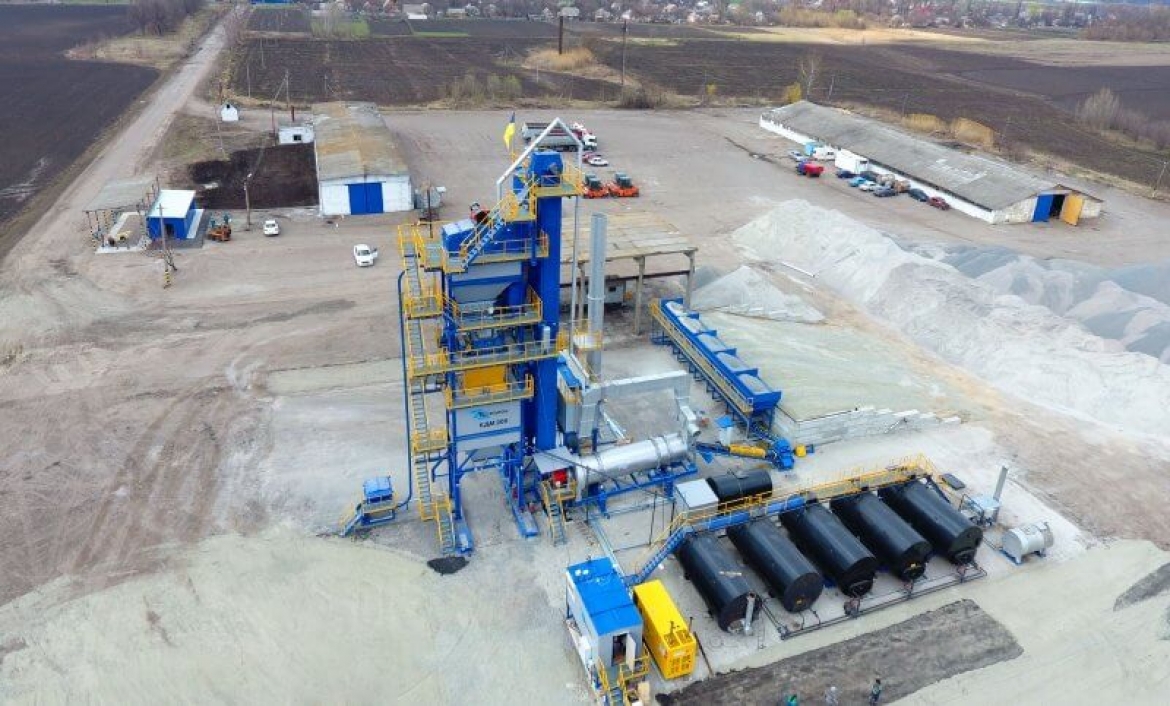
Road construction requires reliable equipment capable of producing high-quality hot asphalt mixtures. This article explains what an asphalt mixing plant (AMP) is, how it is designed, and the key factors that determine the asphalt production process.
You will learn about the different types of asphalt mixing plants and their principal differences. The purpose of this guide is to explain the plant structure and the asphalt production process, which requires a high level of precision, process control, and automation.
What Is an Asphalt Mixing Plant (AMP)?
A modern asphalt mixing plant (AMP) is an industrial facility designed to produce hot asphalt mixtures for road construction. The plant performs the complete production cycle—from drying mineral aggregates to mixing heated materials with bitumen under precisely controlled conditions.
Understanding the operation of an asphalt mixing plant involves evaluating not only its production capacity but also its automation level, process efficiency, and environmental performance.
Modern asphalt plants operate as fully integrated systems in which computerized process control significantly minimizes the influence of human factors. Reliable solutions, such as the asphalt mixing plants manufactured by PJSC Kredmash, ensure consistent production of high-quality asphalt mixtures for durable road pavements while complying with applicable national and international standards.
How an Asphalt Mixing Plant Works
To understand how an asphalt mixing plant operates, it is important to examine the sequence of technological processes performed during production.
The manufacturing cycle begins with feeding raw materials onto the conveyor system, creating a continuous production flow. Every production stage is strictly controlled, as even minor deviations from specified operating parameters may negatively affect the quality of the finished asphalt mixture and overall plant efficiency.
Asphalt Production Process
The production process starts with accurate proportioning of cold aggregates from the cold feed bins. The moist aggregates are then conveyed into the rotary dryer drum, where moisture is removed and the material is heated to the required temperature.
After drying, the heated aggregates are transported by the hot aggregate elevator to the vibrating screening unit. The screened material is separated into individual fractions and stored in the hot aggregate bins for subsequent batching.
Key Production Processes: Drying, Weighing, Mixing and Temperature Control
Efficient asphalt production depends on precise synchronization of all plant systems.
Within the dryer drum, the burner supplies the thermal energy required to remove moisture from the aggregates. Load cells provide accurate weighing of each aggregate fraction according to the selected asphalt mix recipe.
The final mixing process takes place inside the mixer, where the plant control system continuously monitors all operating parameters to maintain the specified asphalt mixture production temperature throughout the batching cycle.
Asphalt Mixing Plant Design
The efficiency of an asphalt mixing plant depends on the reliability and performance of every component within the production system.
When analyzing the design of an asphalt mixing plant, engineers distinguish several major units, including the cold feed system, drying unit, mixing tower, bitumen supply system, and the computerized operator control cabin. These systems operate together as an integrated production complex to ensure stable, high-quality asphalt production.
Main Components of an Asphalt Mixing Plant
A properly engineered asphalt plant consists of specialized equipment designed to perform specific technological functions. The primary components include:
- Cold feed bins for aggregate proportioning;
- Rotary dryer drum equipped with a high-efficiency burner;
- Multi-stage dust collection and gas filtration system;
- Mixing tower incorporating a vibrating screen, weighing hoppers, and twin-shaft pugmill mixer.
Equipment Interaction Within the Production Process
The entire production process is controlled by a centralized microprocessor-based control system.
After drying, the heated aggregate fractions are conveyed by the hot aggregate elevator to the vibrating screen, where they are separated according to particle size before being stored in the corresponding hot aggregate bins.
Based on the selected mix design, the control system automatically discharges the required quantity of each aggregate fraction into the weighing hopper. Heated bitumen is simultaneously delivered through the bitumen supply system, while mineral filler is added in accordance with the production recipe. All components are then transferred to the mixer, where they are blended into a homogeneous asphalt mixture.
Types of Asphalt Mixing Plants
Modern asphalt mixing plants are available in various configurations designed to meet different production requirements.
The primary classification is based on the operating principle of the mixing system, which determines production flexibility, output capacity, and the ability to change asphalt mix recipes. Selecting the appropriate plant depends on production volumes, project requirements, and operational conditions.
Batch Asphalt Mixing Plant
A batch asphalt mixing plant produces asphalt mixtures in individually weighed batches.
This production method provides maximum control over the mixing process and allows operators to change the asphalt mix recipe between batches without interrupting plant operation. Each mixing cycle typically lasts between 40 and 60 seconds, ensuring uniform coating of aggregates with bitumen.
Because every batch is individually weighed and mixed, batch plants provide exceptional production accuracy and are widely used in regions where strict quality standards must be met.
Continuous Asphalt Mixing Plant
Unlike batch plants, a continuous asphalt mixing plant operates without interruption.
Drying, proportioning, and mixing are performed continuously, typically within a single drying and mixing drum. This design provides high production efficiency and is particularly suitable for large-scale infrastructure projects requiring long production runs of the same asphalt mixture.
However, changing the mix design during operation usually results in additional material losses and requires a transition period before the new mixture reaches specification.
Mobile and Stationary Asphalt Mixing Plants
Another important classification criterion is plant mobility.
The choice between a mobile and a stationary asphalt mixing plant directly affects transportation logistics, installation time, production flexibility, and overall project economics.
Manufacturers offer both permanent high-capacity facilities and transportable modular solutions designed for projects requiring frequent relocation.
Mobile Asphalt Mixing Plant
A modern mobile asphalt mixing plant is designed for rapid transportation and installation.
Its modular construction allows the plant to be mounted on semi-trailers or containerized modules, significantly reducing assembly and relocation time.
Depending on the configuration, installation can be completed within only a few days without the need for a permanent concrete foundation.
Mobile asphalt plants reduce transportation distances for hot asphalt mixtures, lowering operating costs while maintaining production quality close to the paving site.
Stationary Asphalt Mixing Plant
A stationary asphalt mixing plant is designed for long-term operation at a permanent production site.
These high-capacity industrial facilities reliably supply asphalt mixtures for large metropolitan areas, regional road networks, and major infrastructure projects.
Compared with mobile plants, stationary installations typically offer higher production capacity, larger storage systems, expanded bitumen facilities, and greater operational flexibility.
They are the preferred solution for companies engaged in continuous commercial asphalt production and long-term road construction programs.
Asphalt Production Technology
Strict compliance with asphalt production technology is essential for manufacturing durable, high-quality asphalt mixtures.
The composition of an asphalt mixture is based on precisely proportioned aggregates, sand, mineral filler, and bitumen binder. Every production parameter is established according to laboratory-designed mix formulations and quality standards to ensure consistent product performance.
Residual moisture in mineral aggregates significantly reduces the adhesion between the bitumen binder and aggregate particles, which may adversely affect pavement durability and service life.
Modern PJSC Kredmash asphalt mixing plants are equipped with advanced microprocessor-based control systems that continuously monitor every critical process parameter in real time.
A high level of automation minimizes the risk of production errors associated with human intervention while ensuring stable operation throughout the entire manufacturing cycle.
As a result, contractors receive asphalt mixtures of consistently high quality that comply with applicable technical specifications and project requirements.
Asphalt Mixture Paving
Once production is completed, the asphalt mixture is transported immediately to the construction site.
To preserve the required laying temperature and material properties during transportation, the mixture is delivered in insulated dump trucks equipped with thermal covers.
At the paving site, asphalt pavers distribute the mixture evenly across the prepared base course, while road rollers compact the material to achieve the specified density and structural performance of the pavement.
Proper transportation, placement, and compaction are essential to ensuring the long-term durability and performance of the finished asphalt pavement.
FAQ
What is an asphalt mixing plant (AMP)?
An asphalt mixing plant (AMP) is an industrial facility designed to produce hot asphalt mixtures for road construction. It performs the heating, proportioning, and mixing of mineral aggregates, mineral filler, and bitumen to manufacture asphalt mixtures that meet specified quality standards.
How does an asphalt mixing plant work?
An asphalt mixing plant operates through a sequence of precisely controlled technological processes.
The production cycle includes cold aggregate feeding, aggregate drying and heating, hot screening, weighing of individual components, and final mixing with bitumen to produce a homogeneous asphalt mixture.
What are the main components of an asphalt mixing plant?
The principal components of an asphalt mixing plant include:
- Cold feed bins;
- Conveyor system;
- Rotary dryer drum;
- Burner;
- Hot aggregate elevator;
- Vibrating screen;
- Hot aggregate bins;
- Weighing hoppers;
- Mixer;
- Bitumen supply system;
- Dust collection and filtration system;
- Operator control cabin with an automated plant control system.
What types of asphalt mixing plants are available?
Based on the production process, asphalt mixing plants are classified as:
- Batch asphalt mixing plants;
- Continuous asphalt mixing plants.
According to mobility, plants are further classified as:
- Stationary asphalt mixing plants;
- Mobile asphalt mixing plants;
- Ultra-mobile asphalt mixing plants.
What is the typical asphalt production temperature?
The discharge temperature of a conventional hot asphalt mixture generally ranges from 150°C to 170°C, depending on the grade of bitumen, mixture composition, climatic conditions, and the use of polymer-modified binders or specialty additives.
Contact Kredmash
If you are planning to invest in asphalt production equipment or expand your road construction business, contact the specialists at PJSC Kredmash.
Our engineering team will help you select the optimal asphalt mixing plant configuration, production capacity, and equipment package to meet your operational requirements and project objectives.
Publish in social networks
Blog
see all
Drying Equipment for Mineral Materials: Technologies and Applications
28.09.2026258 Page views
learn more
How to Calculate Cement, Sand, and Crushed Stone Requirements for a Concrete Plant
28.09.2026335 Page views
learn moreFind a dealer in your region
Leave a request
Оберіть мову контенту
comments