Ви можете обрати мову, якою в подальшому контент сайту буде відкриватися за замовчуванням, або змінити мову в навігації сайту
Concrete Batching Plant Automation: Key Functions of Modern Control Systems
03.08.2026738 Page views
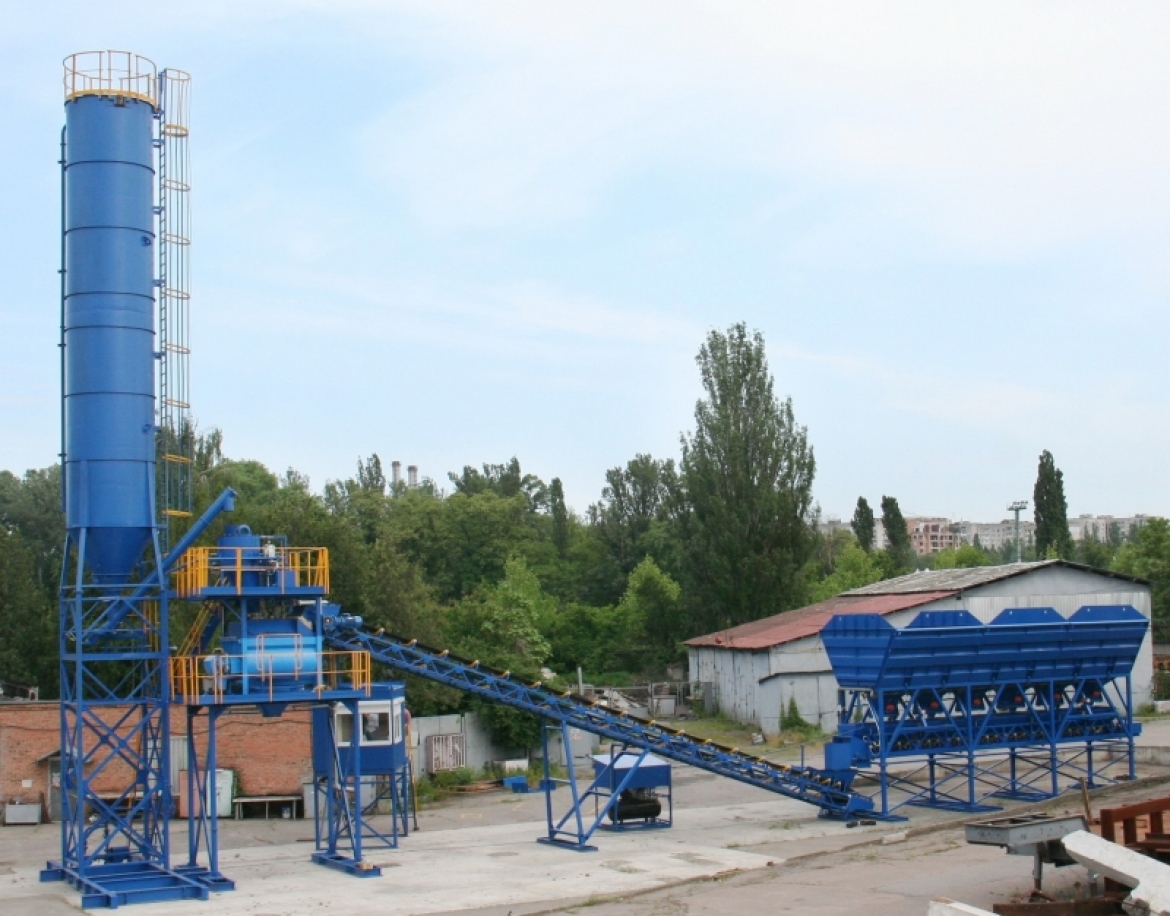
Modern concrete batching plant automation is the intelligent core of an industrial production facility, ensuring uninterrupted manufacturing of high-quality concrete mixes. Today, it is impossible to imagine an efficient concrete batching plant (CBP) operating without a reliable microprocessor-based control system.
A well-designed concrete production automation system directly affects the final strength of concrete, eliminates human error, and significantly reduces production costs per cubic meter of mix. By choosing modern concrete batching plants, manufacturers obtain high-tech equipment fully prepared for commercial production in compliance with applicable industry standards.
What Is Concrete Batching Plant Automation?
Industrial concrete batching plant automation is an integrated hardware and software solution designed for continuous monitoring and control of every stage of the production process. It is far more than a collection of sensors, pushbuttons, and power cables—it is a comprehensive process control system capable of independently monitoring equipment status and controlling heavy machinery in real time.
The primary objective of a Concrete Batching Plant Control System (CBP Control System) is to minimize operator intervention during batching, weighing, and mixing operations while ensuring maximum process accuracy.
Every modern concrete batching plant equipped with advanced automation operates according to precisely programmed algorithms. The integrated automation system synchronizes the operation of cement silos, aggregate bins, conveyors, screw conveyors, batching units, and the main mixer into a single continuous production process.
This level of synchronization enables manufacturers to maximize plant productivity while ensuring a stable supply of ready-mix concrete to construction sites.
Components of a Concrete Batching Plant Control System
A modern concrete batching plant control system features a multi-level architecture consisting of field, control, and operator levels.
At the core of the hardware platform is an industrial PLC (Programmable Logic Controller) that processes thousands of digital signals every second. The PLC continuously receives data from peripheral devices, including:
-
load cells;
-
online moisture sensors;
-
limit switches;
-
pneumatic valves and actuators.
The upper control level consists of specialized batching plant software installed on the operator's workstation.
An intuitive SCADA (Supervisory Control and Data Acquisition) system provides a real-time graphical representation of the entire production process, displaying material flow, conveyor operation, silo filling levels, and equipment status.
A professional Concrete Batching Plant Process Control System (PCS) also incorporates electrical automation components such as:
-
variable frequency drives (VFDs);
-
motor contactors;
-
soft starters.
These devices protect electric motors against overloads while improving operational reliability and energy efficiency.
An uninterruptible power supply (UPS) and automated database backup system are also essential components of the control system. Even during unexpected power failures, production recipes, operational parameters, and production reports remain securely stored.
This approach protects valuable production data and prevents critical process failures caused by power interruptions.
Main Functions of Concrete Batching Plant Automation
A modern control system simultaneously manages dozens of interconnected electromechanical processes responsible for producing high-quality concrete.
Intelligent software performs complex calculations automatically, allowing the operator to focus on overall plant supervision and production logistics. This significantly reduces operational risks while improving plant efficiency.
Automatic Batching and Recipe Management
One of the primary functions of the automation system is the highly accurate batching of aggregates, cement, water, and chemical admixtures.
The recipe management system enables process engineers to store hundreds of concrete mix designs within the control software and switch between them instantly whenever production requirements change.
The control system continuously monitors signals from load cells, ensuring precise weighing of aggregates with extremely small tolerances.
If the moisture content of sand changes, online moisture sensors immediately detect the variation, and the automation system automatically adjusts the amount of added water to maintain the specified water-to-cement ratio.
Quality Control and Equipment Monitoring
Integrated concrete quality control begins at the raw material loading stage and continues until the finished concrete is discharged into the transit mixer.
The control system continuously records mixing time, mixer shaft load, motor current consumption, and concrete consistency. All production data are automatically archived for each batch, providing complete traceability and facilitating laboratory quality verification.
Another essential function is remote equipment monitoring, which enables plant engineers to monitor equipment status from any authorized computer or mobile device.
The process control system automatically calculates equipment operating hours, notifies maintenance personnel when scheduled servicing is required, and detects potential faults in pneumatic valves, actuators, and other critical components.
This predictive maintenance approach minimizes unexpected equipment failures, reduces downtime, and helps maintain consistently high plant productivity.
Benefits of Concrete Batching Plant Automation
Comprehensive automation provides concrete producers with significant operational and economic advantages while ensuring a rapid return on investment.
First, highly accurate automated batching virtually eliminates excessive consumption of cement and chemical admixtures through strict software-controlled weighing.
Second, automated process control significantly reduces the risk of producing off-spec concrete caused by operator error or inconsistent manual operation.
Modern batching plant software also automatically generates shipping documents, production reports, and raw material consumption records while maintaining complete production statistics for each work shift.
Access to production data is protected through user authorization and password-controlled access, preventing unauthorized modifications and improving production transparency.
As a result, manufacturers consistently produce high-quality concrete while strengthening their reputation among contractors and infrastructure developers.
How to Select a Concrete Batching Plant Control System
Selecting an automation system should always be based on actual production requirements, plant capacity, and the desired level of operational flexibility.
Basic relay-based control panels may be suitable for small stationary batching plants producing only a limited number of concrete mix designs.
However, manufacturers supplying large infrastructure projects require a fully computerized automation system capable of handling numerous production recipes, advanced reporting, and seamless process integration.
Special attention should be paid to the quality of the hardware platform.
Industrial PLC controllers, electrical switchgear, sensors, and automation components should be supplied by internationally recognized manufacturers to ensure long service life, high reliability, and readily available spare parts.
The software should also provide:
-
an intuitive operator interface;
-
remote technical support;
-
comprehensive operator training;
-
future software upgrade capabilities.
When Should a Concrete Batching Plant Automation System Be Upgraded?
Automation modernization becomes necessary when an existing control system no longer meets current production requirements.
Typical signs include:
-
frequent equipment malfunctions;
-
inability to integrate modern moisture sensors;
-
inaccurate batching;
-
unstable concrete quality;
-
lack of production reporting;
-
obsolete relay-based control equipment.
Replacing outdated relay cabinets with a modern PLC-based automation system typically requires only a few days while dramatically improving plant performance.
A modernized control system can increase batching plant productivity by 20–30% through optimized batching and mixing cycle management without requiring major mechanical modifications.
Why Choose Automated Concrete Batching Plants from Kredmash?
PJSC Kredmash designs and manufactures reliable industrial equipment with advanced concrete batching plant automation fully integrated into every production system.
Our engineering solutions are based on decades of practical experience gained under demanding operating conditions and continuous high-load production.
Each batching plant control system undergoes comprehensive factory testing, load cell calibration, and software verification before shipment.
Only high-quality European automation components are used, ensuring:
-
reliable operation;
-
transparent production control;
-
precise batching accuracy;
-
consistent concrete quality;
-
long service life;
-
minimal unplanned downtime.
Whether you are planning to purchase a new concrete batching plant or modernize an existing automation system, our engineering specialists will help you select the most efficient solution for your production requirements.
Contact PJSC Kredmash for professional technical consultation and customized automation solutions.
FAQ
How does concrete batching plant automation work?
The automation system continuously collects data from load cells and moisture sensors, processes the information using a programmable logic controller (PLC), and automatically controls conveyors, screw feeders, pneumatic gates, and other plant equipment to produce each batch according to the selected recipe.
What does a concrete batching plant control system include?
A typical control system consists of an electrical control cabinet, PLC controller, load cells, moisture sensors, electrical automation components, and SCADA software installed on the operator's workstation.
Which production processes are automated?
The system automates aggregate feeding, weighing, moisture measurement, water and admixture dosing, mixing cycle control, and concrete discharge operations.
Can an existing batching plant be modernized?
Yes. Existing relay-based control systems can be replaced with modern PLC-based automation while upgrading sensors and software without completely rebuilding the plant.
How does automation improve concrete quality?
Automated process control eliminates human error, maintains accurate batching proportions, and consistently achieves the specified water-to-cement ratio, ensuring uniform concrete quality and strength.
What are the benefits of automatic batching?
Automatic batching reduces raw material consumption, minimizes production waste, improves batching accuracy, increases plant throughput, and enhances overall production efficiency.
Publish in social networks
Blog
see all
Drying Equipment for Mineral Materials: Technologies and Applications
28.09.2026188 Page views
learn more
How to Calculate Cement, Sand, and Crushed Stone Requirements for a Concrete Plant
28.09.2026249 Page views
learn moreFind a dealer in your region
Leave a request
Оберіть мову контенту
comments