Ви можете обрати мову, якою в подальшому контент сайту буде відкриватися за замовчуванням, або змінити мову в навігації сайту
Dosing of additives and microcomponents to increase the strength of concrete at a concrete mixing plant
07.01.20261890 Page views
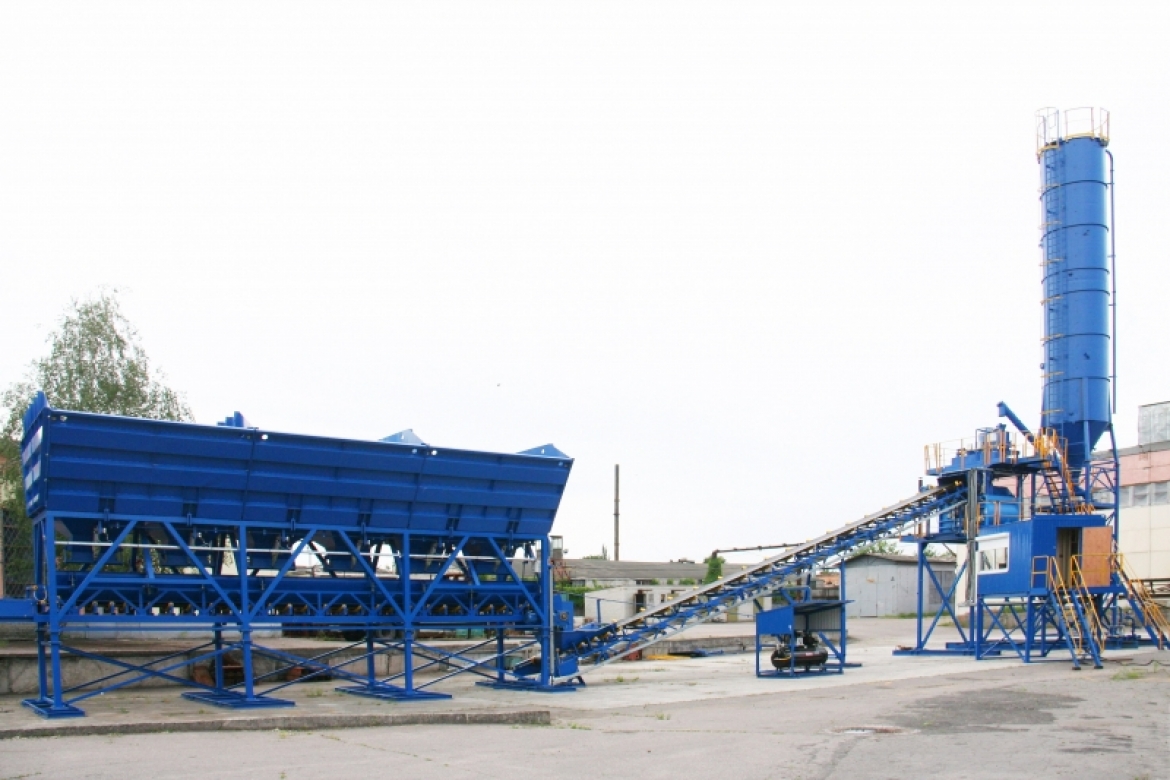
Accurate batching at a concrete mixing plant (CMP) directly impacts concrete strength, structural durability, and project cost. Errors in the supply of water, cement, additives, and micro-components lead to property variations, increased defects, and downtime.
The modern concrete mixing technology from Kredmash JSC addresses this through automation, calibrated batchers, and real-time control of mix parameters. Let's explore the process and what needs to be considered to produce a consistently high-quality concrete mix.
Fundamentals of concrete strength formation
Key strength factors: cement, water, aggregates, curing conditions
Strength is determined by the water-cement ratio, cement activity, and aggregate size distribution. Maintaining a stable workability and adjusting the water content to the sand's moisture content is essential. Curing conditions (temperature, humidity, and protection from drying out) determine the rate and depth of hydration. Any fluctuations in these parameters degrade the structure of the cement stone.
The role of the concrete mixing plant in ensuring a homogeneous mix
Homogeneity depends on the accuracy of the batchers, the mixing algorithm, and the condition of the mixer. Scale calibration, proper functioning of the level sensors, and the correct loading sequence are essential.
Controlling mixing time and speed reduces segregation and stabilizes rheology. Over many years of experience in the production, commissioning, and maintenance of concrete mixing plants, the specialists at Kredmash have confirmed this principle.
Types of additives and microcomponents
Chemical additives – plasticizers, superplasticizers, accelerators, retarders
Plasticizers reduce mixing water without affecting workability. Superplasticizers provide high flowability at a low water/cement ratio and promote strength gain.
Accelerators are useful in cold weather and during repairs, while retarders are useful during long-distance transportation of the mix. Dosing is based on solids content, taking into account temperature and alkalinity.
Mineral microcomponents – microsilica, fly ash, slag
Microsilica increases early and grade strength and reduces permeability. Fly ash improves rheology, increases sulfate resistance, and reduces heat generation. Slags increase durability and resistance to chloride attack. Each type requires its own mixing regimen and water adjustments.
How additives affect strength, water resistance, and frost resistance
Reducing the water/cement ratio while maintaining mobility increases the density of the structure. Compacting the matrix reduces capillary porosity and water permeability. The correct combination of chemical and mineral components improves frost resistance and crack resistance. It is important to validate the formulation in both laboratory and industrial settings.
Application of high-precision dosing in construction
High-strength concrete for bridges, tunnels, and high-rise construction
Concrete grades C40/50 and higher require a low water/cement ratio and strict admixture control. High early strength is important for formwork stripping and reduced timeframes. Precise batching and automation minimize risks and ensure predictable results.
Hydraulic structures: density and watertightness requirements
For dams, collectors, and reservoirs, leaching resistance, crack resistance, and low permeability are important. Mineral microcomponents reduce permeability, and chemical additives stabilize rheology.
Cost-effectiveness of precise batching
Cement consumption is reduced due to optimal water/cement ratio. Rejection and rework are reduced. The service life of structures is extended, and lifecycle costs are reduced. ROI is increased due to predictable quality and reduced downtime.
Quality control and standards
Laboratory testing methods: strength, water resistance, density
Cubes and cylinders are tested to determine water resistance, frost resistance, density, and air content. Workability (slump/flow) and slump retention are monitored. Statistical control programs detect parameter drift.
DSTU, GOST, EN, and ASTM regulatory requirements for additives and formulations
Admixtures must comply with relevant standards and have quality certificates. Formulations are validated against design documentation and regulations. Mixing logs and batch traceability are mandatory for critical projects.
That is why it is important to partner with reputable companies that have all the necessary documentation and certificates.
Integration of a concrete mixing plant with quality control systems
The control system transmits data to laboratory databases: recipe, mass, temperature, and mixing time. It is possible to block the start if incorrect parameters are encountered. The archive provides an audit trail and evidence of quality.
Eco-friendly and energy-efficient technological solutions
Reducing cement consumption through mineral additives reduces the carbon footprint. Energy-efficient drives and optimized cycles reduce energy consumption.
Conclusion
Strength of concrete begins with precise dosing and uniform mixing in a concrete mixing plant.
Modern additives and micro-components enhance structure and durability when the process is automated and controlled. The integration of sensors, standards, and analytics ensures consistent quality, cement savings, and reduced defects.
The industry's future lies in digitalization, predictive management, and smart recipes that make concrete production reliable and efficient.
Want to optimize your own concrete production and build a highly efficient business? Contact our specialists, and we'll find a ready-made solution for you or develop a custom project.
Publish in social networks
Blog
see all
Drying Equipment for Mineral Materials: Technologies and Applications
28.09.2026258 Page views
learn more
How to Calculate Cement, Sand, and Crushed Stone Requirements for a Concrete Plant
28.09.2026335 Page views
learn moreFind a dealer in your region
Leave a request
Оберіть мову контенту
comments